Elkins’ Fire & Rescue Fees: What They Fund and Why They Matter
Your Elkins Fire & Rescue Fee ensures help arrives for accidents, medical crises, and fires across our entire region. Read on to learn how this crucial investment keeps 150 square miles safe.
Picture any of these scenarios:
✅ Your child gets stranded on a rock at your favorite swimming hole when the river suddenly rises after a storm upstream.
✅ A lifted pickup truck T-bones your car as you’re turning into Sheetz on the five-lane.
✅ A hiker gets lost in Otter Creek or trapped in a cave.
✅ Or, of course, a fire starts in your home because of old wiring while your family is sleeping.
Emergency Services You Might Not Expect
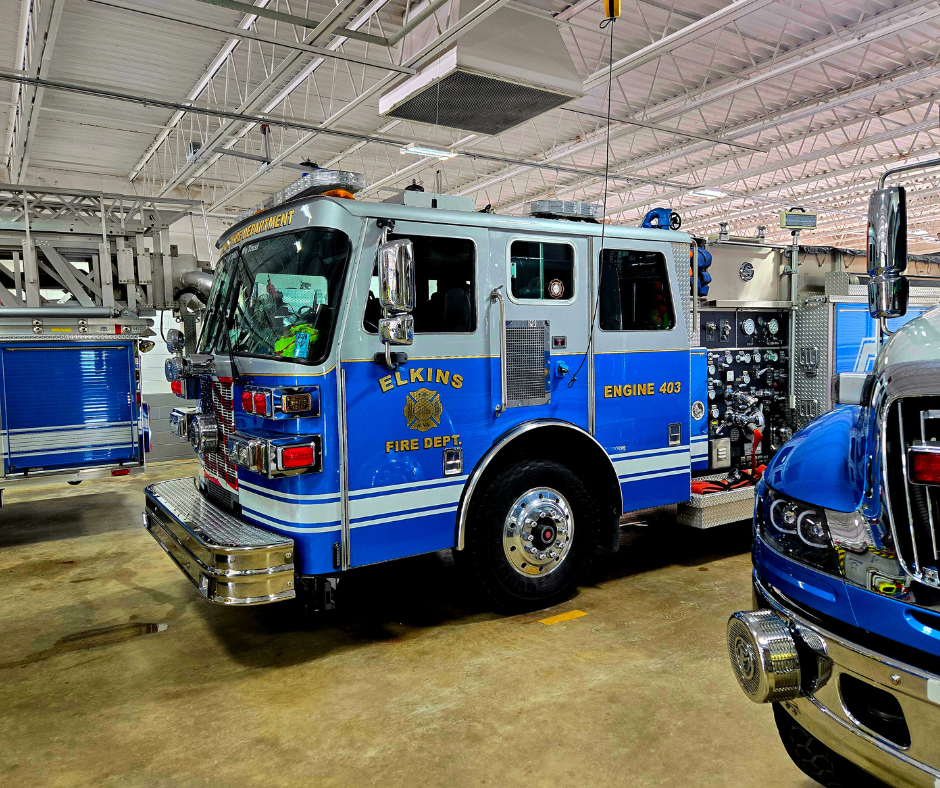
In all these emergencies—and many more—the Elkins Fire Department (EFD) responds, whether the crisis happens within Elkins city limits’ three square miles or across the rest of its 150-square-mile “first-due” area beyond the City. If your car skids into a ditch on the way down a nearby mountain, or you slip and get stuck in your favorite local fishing spot, the chances are high that an Elkins fire truck will be on the scene.
This speaks to the dedication of the City’s full-time and volunteer fire fighters, but this is about more than goodwill or heeding the call to service: The West Virginia Fire Marshal assigned this 150-square-mile response area to EFD.
Since 2015, Fire & Rescue Service Fees (or “Fire Fees”) have funded these critical responses:
🚑 Medical emergencies
🚧 Car accidents
🌊 Water rescues
☢️ Hazardous material spills
These and many other kinds of calls that keep coming, at all hours of the day and night. EFD’s paid and volunteer firefighters answer about 650 emergency calls year after year. Not convinced? Come by the fire department on Fourth and Randolph and just watch and listen for a few hours. Trust us: This is rarely a quiet building.
Wait. The Fire Department Does More than Fight Fires?
Way more.
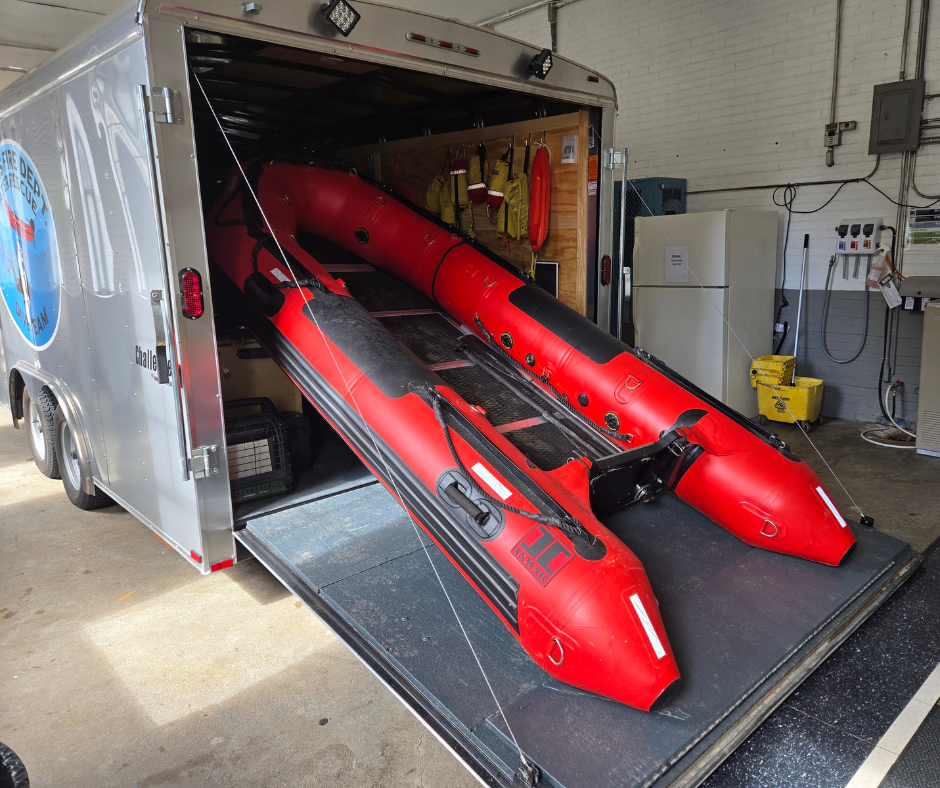
As just one example of the dedication and technical expertise of EFD personnel, take the department’s swift water rescue team, ready to roll out for challenging rescues and other operations in rivers, floodwaters, and lakes. The swift water rescue team includes full-time and volunteer firefighters and medics trained as water rescue operators and divers. When rivers suddenly rise, this team is ready to move stranded people to safety. If a swimmer needs emergency medical assistance on the rocks in the middle of a river, the EFD swift water rescue team has the equipment (as shown below) for a safe, effective rescue. And in the worst-case scenario, in the event of a drowning, this is the team that will manage the recovery with professionalism and respect.
Further, when an accident involving hazardous chemicals occurs, EFD is also prepared to answer that call. These events could range from a crashed tanker truck on a city street to a chemical spill in the local college’s science lab. For any such situation, EFD has hazmat equipment ready at its disposal.
Who Pays the Fire Fee, and Why?
The Fire & Rescue Service Fee is charged to all property owners in EFD’s 150-square-mile service area, including homes and businesses in and around Elkins. Fees start at $100 per year, based on building size, and haven’t increased since 2015. Each year, this fee generates approximately $940,000, every dollar of which must be spent on the fire department.
This revenue supports nine full-time firefighters, 15 volunteers, and the fire chief, who together respond to around 650 calls each year. It also pays for purchasing and maintaining fire trucks and the expensive specialized equipment that firefighters need to save lives and stay safe while doing so.
Finally, it pays for the frequent training and recertifications firefighters must receive to keep up to date on the latest information including firefighting, extractions from motor vehicles, swift water rescue, aerial rescue, emergency medical treatment and helicopter medevac operations.
Without this funding, EFD could not afford current staffing levels, vehicles with the latest technology, and many other crucial components enabling this department’s fast, effective emergency responses throughout its 150-square-mile service area.
In other words, without this funding, EFD would still be responsible for the same huge area but with far fewer resources—leading to slower response times and greater risks for everyone, the public and firefighters alike.
What Exactly Do the Fire Fees Pay For?
Let’s start with personnel: 80 percent of the fire department’s budget covers personnel costs. Specifically, the Fire Fee makes it possible for EFD to staff the firehouse with three paid firefighters on duty every shift, seven days a week, 24 hours a day.
Why can’t this be done only with volunteers? Volunteers have always and will always be crucial to this department, but the fact is that the number of people willing to volunteer is declining. Right now, there just aren’t enough of them with enough availability to staff the department at this level at all times.
The Fire Fee also allows EFD to fund large capital purchases—and maintain them. The fire department’s current equipment includes four Class A engines, one heavy rescue truck , one 95-foot tower to assist when an emergency occurs at a multi-story building, one brush unit (crucial to fight wildfires), and the hazmat and dive trailers.
Here is a sample of the significant equipment costs faced by the Elkins Fire Department, according to the Fire Chief:
- Providing a single firefighter with essential personal protective equipment averages $4,200.
- Each self-contained breathing apparatus costs an additional $8,000.
- The price of a new pumper or fire engine exceeds $900,000, depending on its model and specifications.
- Replacing an aerial ladder truck represents a major capital investment of $1.5 to $2 million.
These are not optional purchases. Based on regional demographics, population density, and the number of multi-story buildings, the EFD is required by national safety standards to maintain a specific number of each apparatus. This mandatory inventory is in addition to the constant replacement of smaller yet critical items like hoses, nozzles, hydraulic rescue tools, and medical equipment.
What if Non-Residents Didn’t Pay the Fire Fee?
Before 2015, only Elkins property owners paid the fire fee. The revenues collected from property owners covered only a fraction of the department’s costs, so EFD had to compete with all other municipal departments for funding. Back then, there was only one paid firefighter per shift, so precious minutes were lost waiting after each 911 call for at least two volunteers to arrive before the first fire truck could roll out of the building and head to the scene of the emergency. Without support from the entire 150-square-mile area served by EFD, the department’s capabilities would be greatly reduced.
This nearly happened recently. During the 2025 legislative session in West Virginia, Senate Bill 601 proposed letting counties veto municipal Fire Fees, which could have exempted non-Elkins residents from paying. Though the bill stalled, the debate revealed a hard truth: If non-residents stopped contributing, EFD and City Council would face two difficult choices:
- Raise fees imposed on Elkins residents to cover the cost of protecting lives and property inside and outside city limits, with no support from the vast majority of the department’s service area.
- Cut EFD’s staff, delaying emergency response time across this region.
Neither option is fair to Elkins residents—or safe for anyone within the 150-square-mile first-due area, because reduced revenues wouldn’t reduce EFD’s responsibility to respond to emergencies throughout the region.
Why Can’t the City Just Use Other Funds?
Some ask: Couldn’t Elkins just shuffle money from other budgets to augment funding for EFD?
This isn’t as easy as it sounds. One thing to understand about a municipal budget is that revenues must closely match expenditures. The City of Elkins isn’t allowed to stockpile funds in savings above a relatively small amount. That means that most dollars that come in are spoken for by all of the many services the community expects its city to provide.
Significantly increasing General Fund support for the fire department would require taking that money from somewhere else in the budget. If no other funding option is available, the City may indeed have to reallocate funds to ensure at least a basic level of fire and rescue services. But any such reallocation would necessarily reduce resources available for other services, and every government service has its supporters who would fight to preserve it.
The Bottom Line: Fire Fees Keep Everyone Safer
The Fire Fee isn’t only about fires—it’s about keeping our entire region prepared for emergencies. Whether it’s a heart attack, a car accident, or a river rescue, EFD’s responders are there because of this investment shared by everyone under the department’s protection.
By pitching in to pay this fee, we can all work together to ensure that when disaster strikes—anywhere in EFD’s 150-square-mile service area—help is on the way.

City Hall News: Week of March 15, 2026
Elkins, WV – March 14, 2026: The City of Elkins offers residents and business owners free reflective address numbers. Please don’t let severe weather or darkness hide your home or business if first responders have to arrive on the scene in an […]
Read More
An Update on Garbage and Bulk Item Pickup in Elkins: March & April 2026
Elkins residents who use the City’s sanitation services have benefits beyond weekly garbage collection—including a free monthly bulk item pickup. While the Sanitation Department generally follows a consistent schedule, this hard-working crew occasionally has to adjust it with little notice. These changes […]
Read MoreCity Hall News: Week of March 8, 2026
Elkins, WV – March 8, 2026: The City of Elkins now offers residents and business owners free reflective address numbers. Please don’t let snow, fog, or darkness hide your home or business if first responders have to arrive on the scene in […]
Read More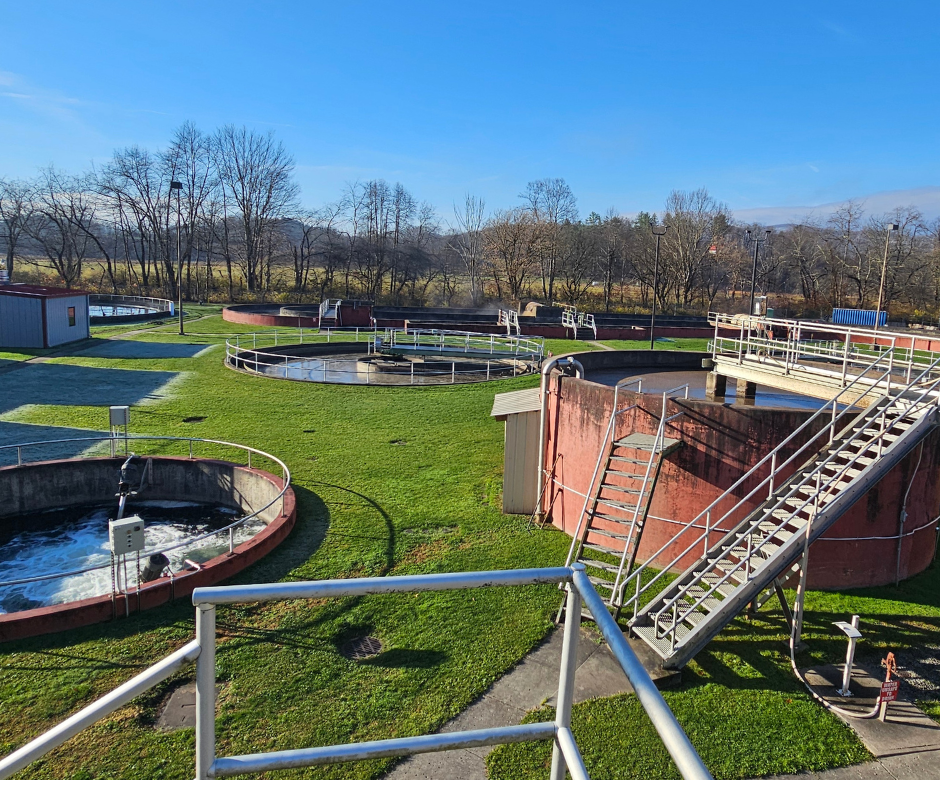
City of Elkins Approves Multi-Year Sewer Rate Increase to Fund Critical Infrastructure Upgrades
Elkins, WV – March 5, 2026: Following a recommendation from the Elkins Sanitary Board, the Elkins City Council has approved a series of sewer rate increases to be phased in over the next three years. The multi-year adjustment will fund a major […]
Read More
Spring Means a New Series of Tree Talks!
The Elkins Tree Board and Kump Education Center will launch a new Tree Talks Lecture Series on Wednesday, March 4, at 7 p.m., inviting the community to learn more about the region’s Appalachian woodlands and the challenges they face. The free, three-part […]
Read More
Elkins Seeks Ideas from the Public for the 250th Anniversary of the United States’ Independence
*Elkins, WV, February 24, 2026: Mayor Jerry Marco announced today that the City of Elkins will begin planning its official celebration of the United States’ 250th anniversary, known as the Semiquincentennial, culminating on July 4, 2026. This historic milestone presents a unique […]
Read More